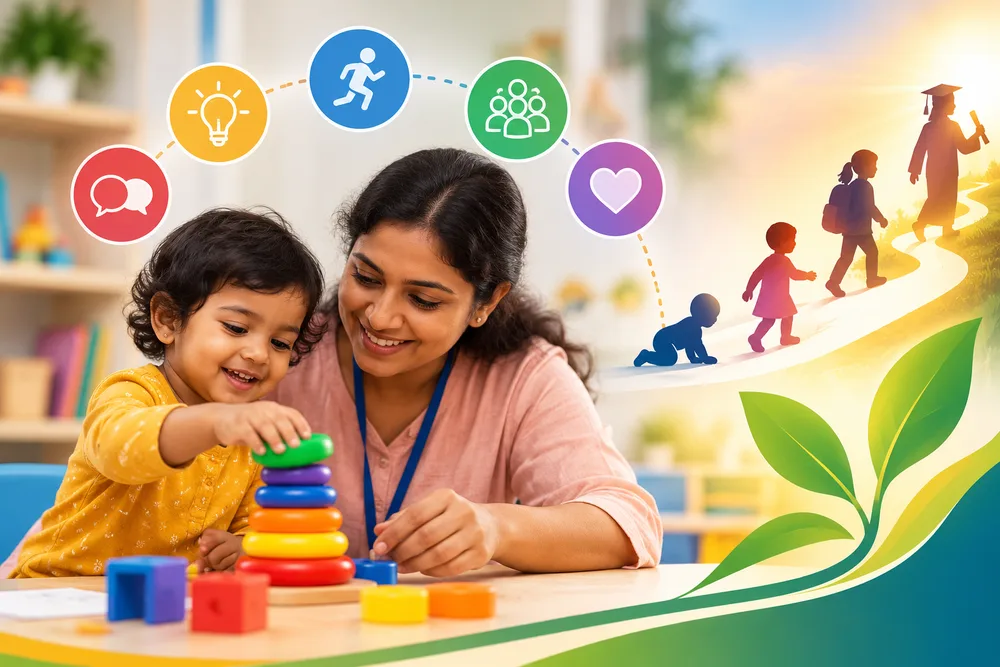
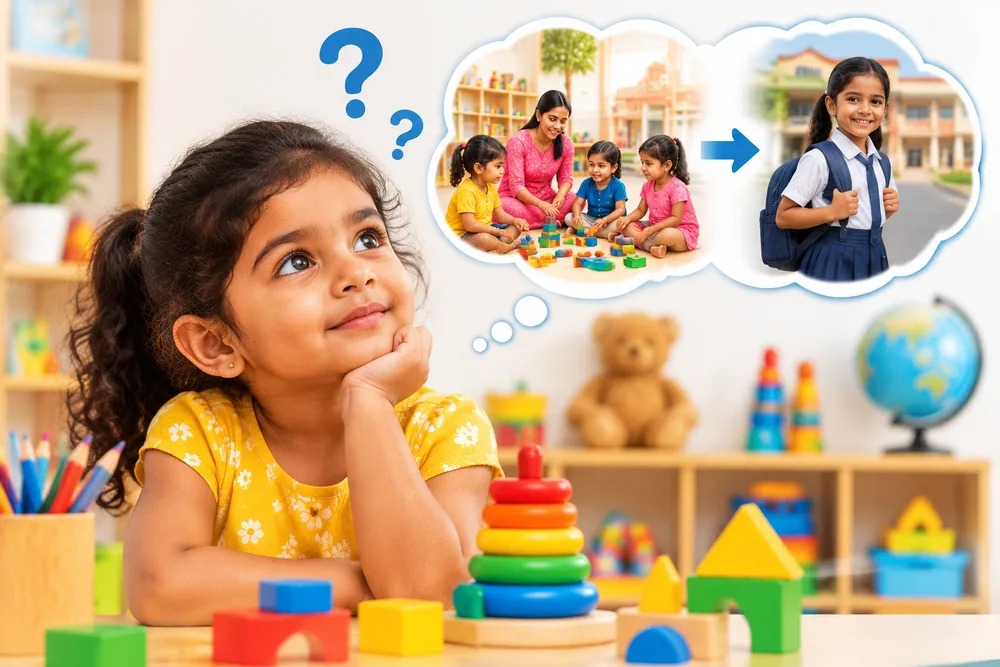
I would like to begin my answer with the fact that the mother of Early Education Dr. Maria Montessori identifies the age 2 to 6 as the “Absorbent Mind”. In this age children are eager to learn everything and learn everything they see, hear, smell, taste and touch. This is a stage of curiosity and non-stop questioning.
In today's world of small families, apartment homes and working women, if children stay at home at this curious age, their questions go unanswered curbing their interest in asking and limiting their learning. Even with home maker moms, the absence of a joint family system pushes moms to leave children in front of the television while they tend to household and personal hygiene chores and children end up favouring object interaction for the rest of their lives limiting conversation and social skills.
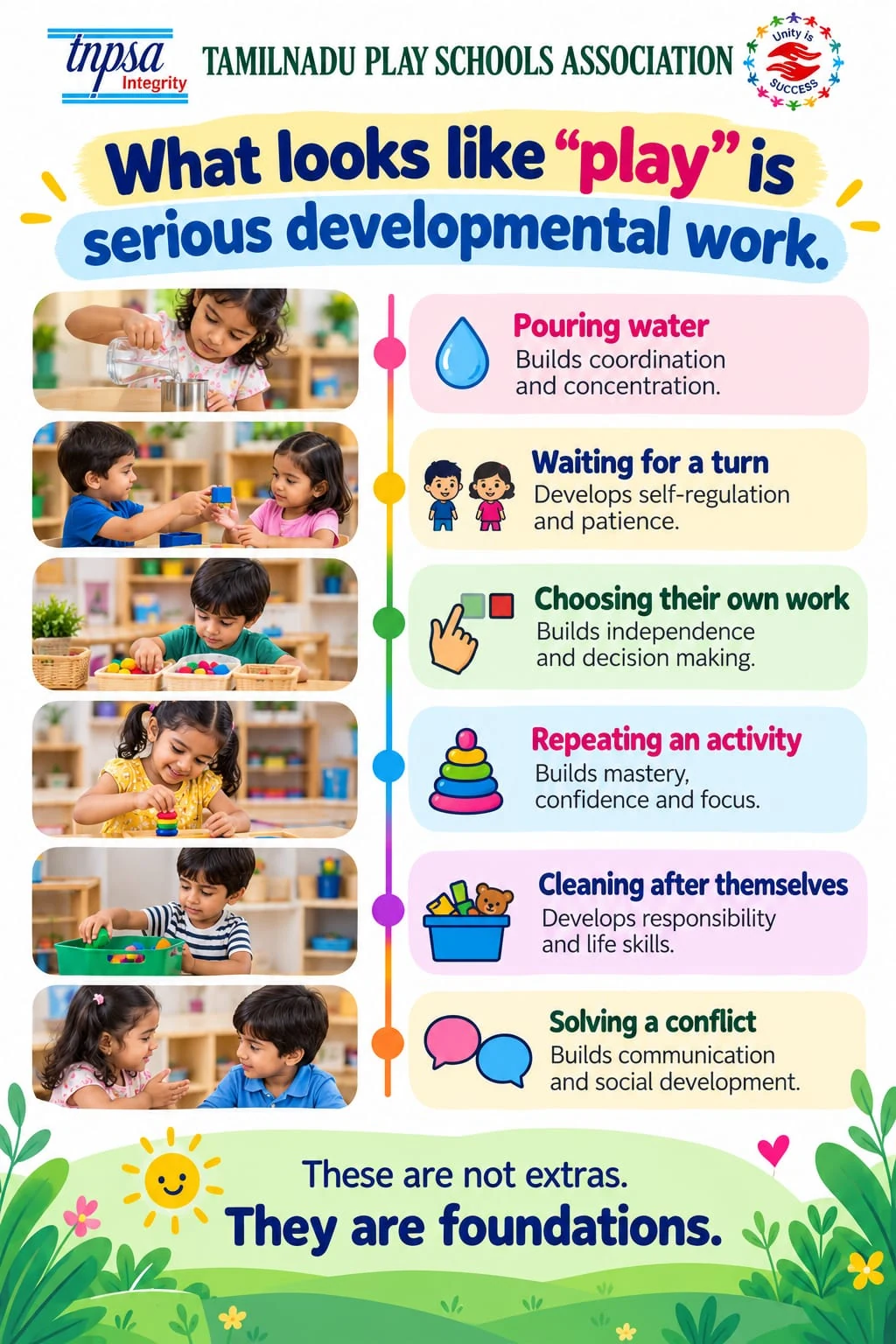
Also, unless there is a supervised and well prepared environment that can address their questions, keep up with their energy and allow them to socialize with their own peers, children will simply become bored and irritable and throw tantrums and begin to behave adamantly and act out asking more materials and do not develop human interaction. In early years of childhood, children also require a lot of sensory experiences like water play, sand play, movement activities and music.
In today's household one big loss is structure, rules and routine. Children are allowed to eat what they want, however they want, there is no sleep hygiene. Even toilet training is delayed. Early school will create a structure and routine in their minds. Lack of planning and organizing is the biggest reason for later poor school performance. In fact, in my experience, the later children start school, the harder it becomes to perceive learning as fun, simply because as they get older, their innate sense of curiosity becomes mitigated by the constant micromanagement by busy and anxious adults.
On making learning joyous early, it becomes their second nature, a meta-cognitive reflex, wherein learning becomes based on their innate curiosity, thus making it contextually fun before it becomes their job. In this age clapping and bodily gestures and few appreciative words are enough to ensure each child has a feeling of achievement and accomplishment in what they do. If learning is taken up above 3 years children tend to look forward to materials as tokens of appreciation.
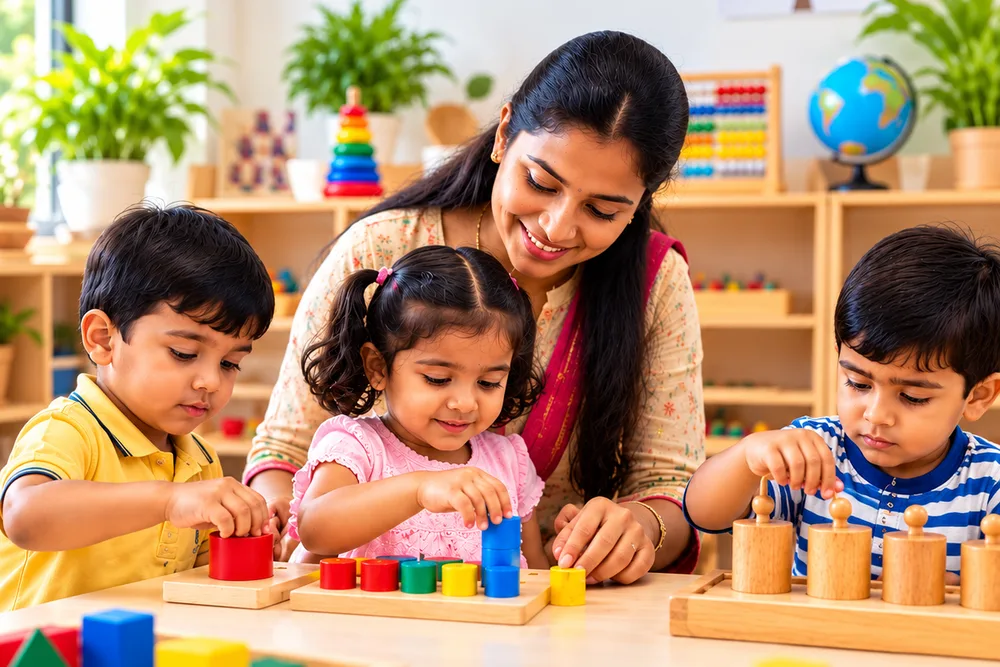
In small preschools each child can be encouraged to express their needs and thoughts as compared to big schools with large number of kids in a classroom. This promotes constructive outlets for emotions and limits opportunities for misbehaviour. It can help cultivate the skills needed for success in school experiences by developing language skills, and perceptual or sensory and conceptual play like doll house play. It can help develop positive attitudes towards authority early, before they are used to getting their way around at home.
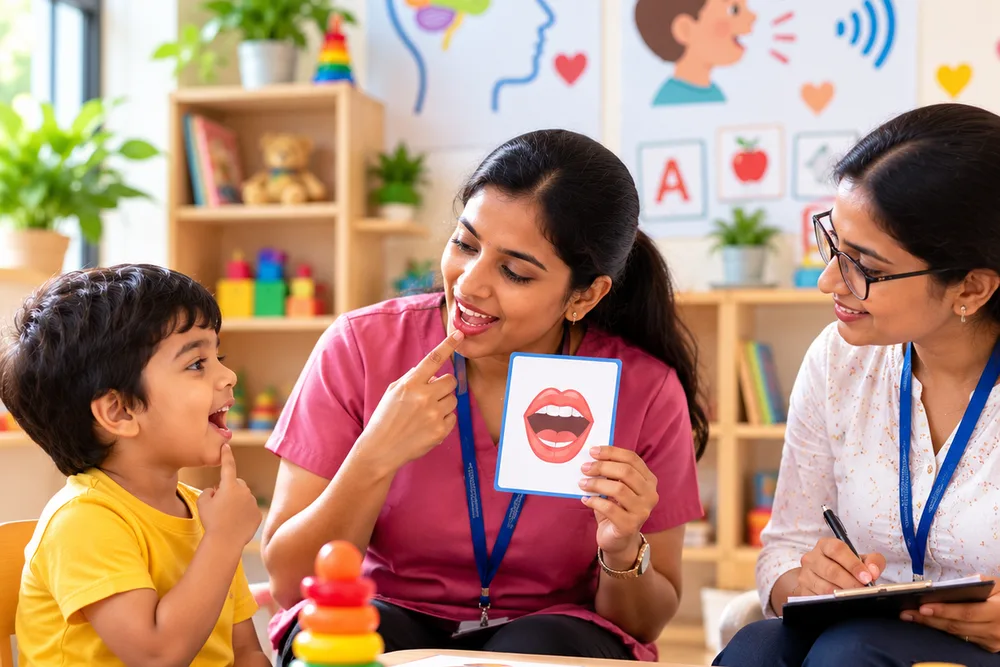
In my 18 years of experience as a Developmental Pediatrician, I can vouch that the incidence of developmental problems such as autism and ADHD have markedly increased. My first therapeutic advice in the last 15 years has been admission in a playschool. This has even prevented children from going for occupation therapy. A number of kids have been able to attend mainstream school because of the therapeutic effect small playschools provide because of their near personal attention. With more number of playschools coming up it makes this very easy. So, my recommendation would strongly encourage more number of playschools to emerge.
Dr. Manu Arun, MD Pediatrics and Certificate in Child Development. Director, Sri Narayana Development Center, Vadapalani, Chennai; Dr. Manu's Foundation Child Development Center, Nungambakkam; Dr. Manu's Foundation Inclusive Sports Center, Nungambakkam; The Learning Bridge – School Inclusion.